



Vancouver, British Columbia--(Newsfile Corp. - November 16, 2026) - LaFleur Minerals Inc. (CSE: LFLR) (OTCQB: LFLRF) (FSE: 3WK0) ("LaFleur Minerals" or the "Company") is pleased to report assay results from the Fall 2026 Swanson Gold Deposit drill program, which is within the much larger Swanson Gold Project ("Swanson" or the "Project") drill program. This near-surface mineralization returned 2.52 g/t Au over 14.35 metres, including 9.40 g/t Au over 1.7 metres and 5.37 g/t Au over 2.5 metres (SW-26-126) and a second hole with 0.86 g/t Au over 45.0 metres, including 2.00 g/t Au over 7.5 metres, 2.08 g/t Au over 4.15 metres and 2.47 g/t Au over 1.50 metres (SW-26-125).
DRILLING EXTENDS SWANSON GOLD DEPOSIT:
The ongoing planned drill program for the Swanson Deposit includes 26 holes totalling 12,300 metres. Drill results reported in this press release have extended the gold mineralization approximately 90 metres west along strike and near the surface from the planned bulk sample or starter pit.
SWANSON DEPOSIT DRILLING HIGHLIGHTS
- 2.52 g/t Au over 14.35 metres (SW-26-126)
- Including 9.40 g/t Au over 1.70m
- And 5.37 g/t Au over 2.50m
- 0.86 g/t Au over 45.0 metres (SW-26-125)
- Including 2.00 g/t Au over 7.5m
- And 2.08 g/t Au over 4.15m
- And 2.47 g/t Au over 1.50m
Andrew Elinesky, CEO of LaFleur Minerals, commented: "We are very encouraged by these continuing drill results from our Fall 2026 drilling program which was designed not only to test areas of near-surface mineralization that could potentially contribute to an expanded starter pit, but also to systematically test and expand the outer limits of the Swanson Deposit. This includes following the mineralization along strike, down-dip and, importantly, evaluating the down-plunge extension of the deposit, which remains open based on the Company's early drilling results and geological interpretation. We believe that testing these extensions is an important part of understanding the overall scale and continuity of the deposit and its longer-term resource expansion potential.
These latest results reinforce our confidence in the potential for further expansion of the Swanson Deposit, while advancing our broader objective of establishing a larger mineralized inventory to support the development of the Swanson Gold Project and the planned utilization of our Beacon Gold Mill."
Swanson Drill Program
The Swanson Gold Deposit drilling program forms part of LaFleur Minerals' broader 25,570.5 metre, 93-hole drilling program at the Swanson Gold Project (Figure 1). The planned Fall 2026 Swanson deposit drilling program consists of 26 holes totalling approximately 12,300 metres. These holes are filling larger gaps in the existing drilling as well as following the mineralization down-dip and expanding the outer limits of the known mineralization. To date 6,756 metres in 15 holes have been completed in the area of the Swanson deposit for the Fall 2026 Swanson deposit drill program. Assay results are currently available for the first 5 (five) holes completed that are reported in this news release. The ongoing Fall 2026 Swanson Gold Deposit drill program will test high-priority targets based on significant gaps in the existing drill data, as well as testing the limits generated from geological modelling and interpretation. Results will be reported once assays are received.
Significant assay results from the Swanson Deposit drilling program are presented in Table 1 and Figures 1, 2 and 3. Drill collar coordinates and details are presented in Table 2.
Hole SW-26-125 was drilled to validate and characterize the style of mineralization at the western limit of the initial planned pit shell, located approximately 20 metres west of the interpreted wireframe. SW-26-125 intersected a wide zone of mineralization, including 0.86 g/t Au over 45.0 metres from 76 to 121 metres downhole, including multiple higher-grade intervals with 2.00 g/t Au over 7.5 metres, 2.08 g/t Au over 4.15 metres and 2.47 g/t Au over 4.15 metres. These shallow mineralized intervals lie between 60 and 90 metres below surface.
Hole SW-26-126 was drilled 90 metres west of the bulk sample/ starter pit to validate and characterize the style of mineralization further outside of the initial planned pit shell. SW-26-126 intersected 2.52 g/t Au over 14.35 metres from 72.75 to 87.1 metres downhole, including higher grade sections with 9.40 g/t Au over 1.7 metres and 5.37 g/t Au over 2.5 metres. These shallow mineralized intervals lie between 55 and 65 metres below surface.
Given the shallow depth, width and grade of these intersections, the initial starter pit can potentially be expanded to the west. The outer edges of the Swanson Deposit remain a priority target for follow-up drilling to test the continuity of the mineralization along strike and down-dip.
Swanson Gold Deposit
The Swanson Gold Deposit is located within the Abitibi Greenstone Belt of the Archean Superior Province in Québec, Canada, one of the world's most prolific gold-producing geological regions. The deposit is hosted within a complex assemblage of volcanic and intrusive rocks characterized by significant structural deformation, shear zones, and hydrothermal alteration, providing favourable conditions for the development of orogenic gold mineralization.
The Swanson Project encompasses a sequence of mafic to felsic volcanic rocks, including basalts, andesites, rhyolites and felsic tuffs, together with intrusive rocks ranging from syenite and monzonite to diorite, tonalite and granodiorite. Gold mineralization is associated with altered mafic volcanic and ultramafic rocks, intrusive contacts, and structurally controlled zones of shearing and veining. Hydrothermal alteration assemblages include silicification, sericite, chlorite, carbonate and fuchsite, accompanied by quartz veining and fine sulphide mineralization. These features are consistent with structurally controlled, orogenic-style gold systems, with potential contributions from magmatic-hydrothermal processes in parts of the broader property.
Gold mineralization at Swanson occurs across multiple mineralized zones and is characterized by broad intervals of disseminated and vein-associated gold, locally accompanied by higher-grade intervals and visible gold. Recent drilling has confirmed the continuity of mineralization across previously under-tested areas, including at depth and between historical drill holes, supporting the refinement and expansion of the geological model. Significant intercepts previously reported by the Company can be found in the press releases reported on its website. Mineralization remains open along strike and at depth, highlighting the potential for further resource expansion.
The combination of established gold mineralization, demonstrated continuity in recent drilling, favourable host rocks and structural controls, and multiple satellite prospects provides a strong geological foundation for continued exploration and evaluation of the Swanson Gold Deposit and the broader Swanson Project, including results reported at our Bartec, Jolin and Jackson areas on news release dated October 5, 2026.
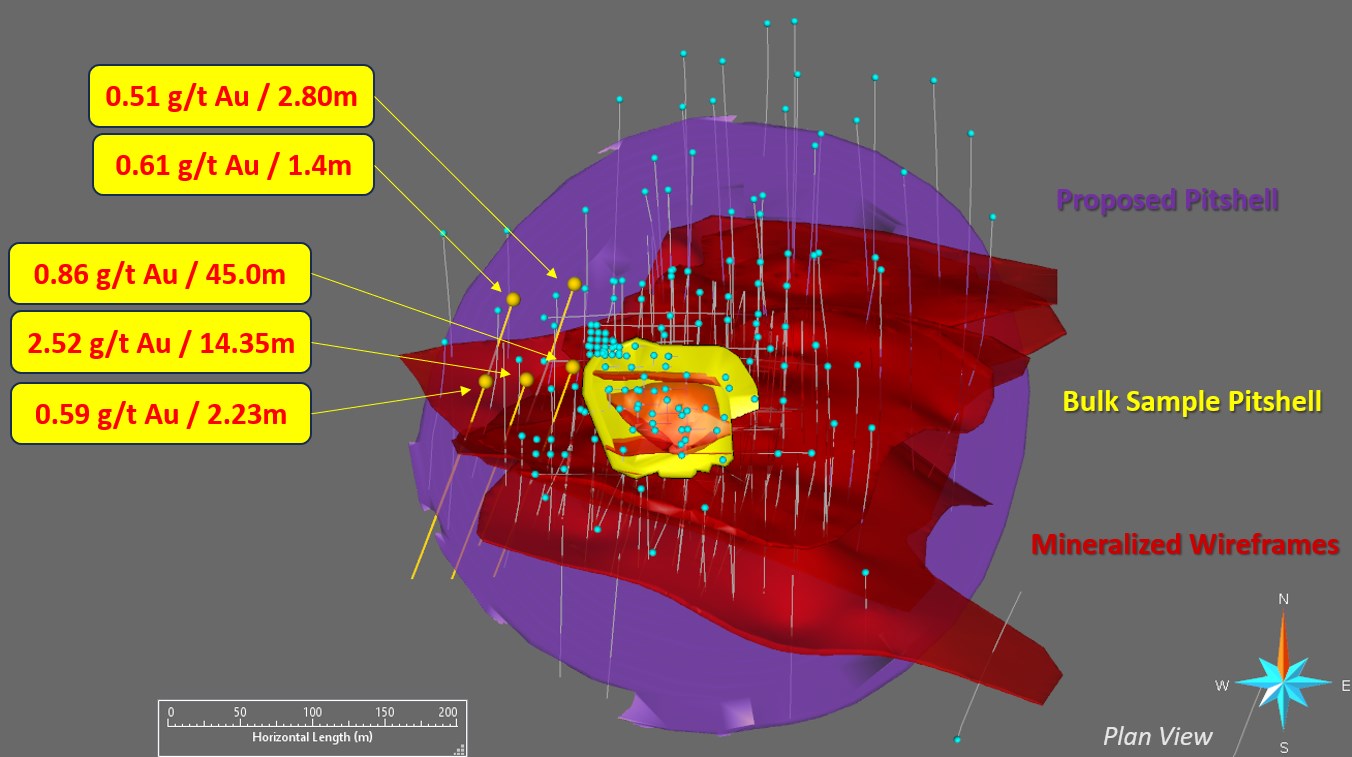
Figure 1: Swanson Deposit - Plan View
To view an enhanced version of this graphic, please visit:
https://images.newsfilecorp.com/files/6526/324129_5f24117d744b5bf4_001full.jpg
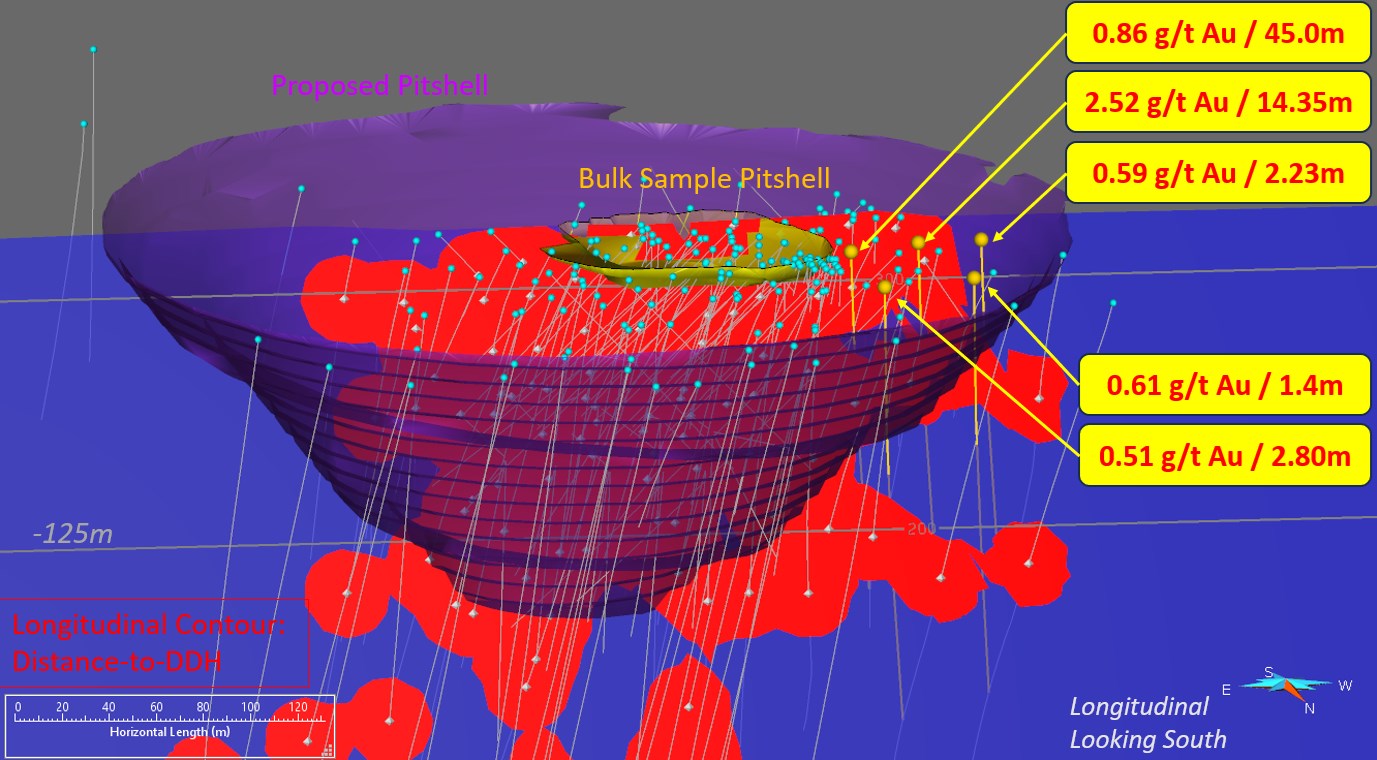
Figure 2: Swanson Deposit - Oblique Longitudinal View
To view an enhanced version of this graphic, please visit:
https://images.newsfilecorp.com/files/6526/324129_5f24117d744b5bf4_002full.jpg
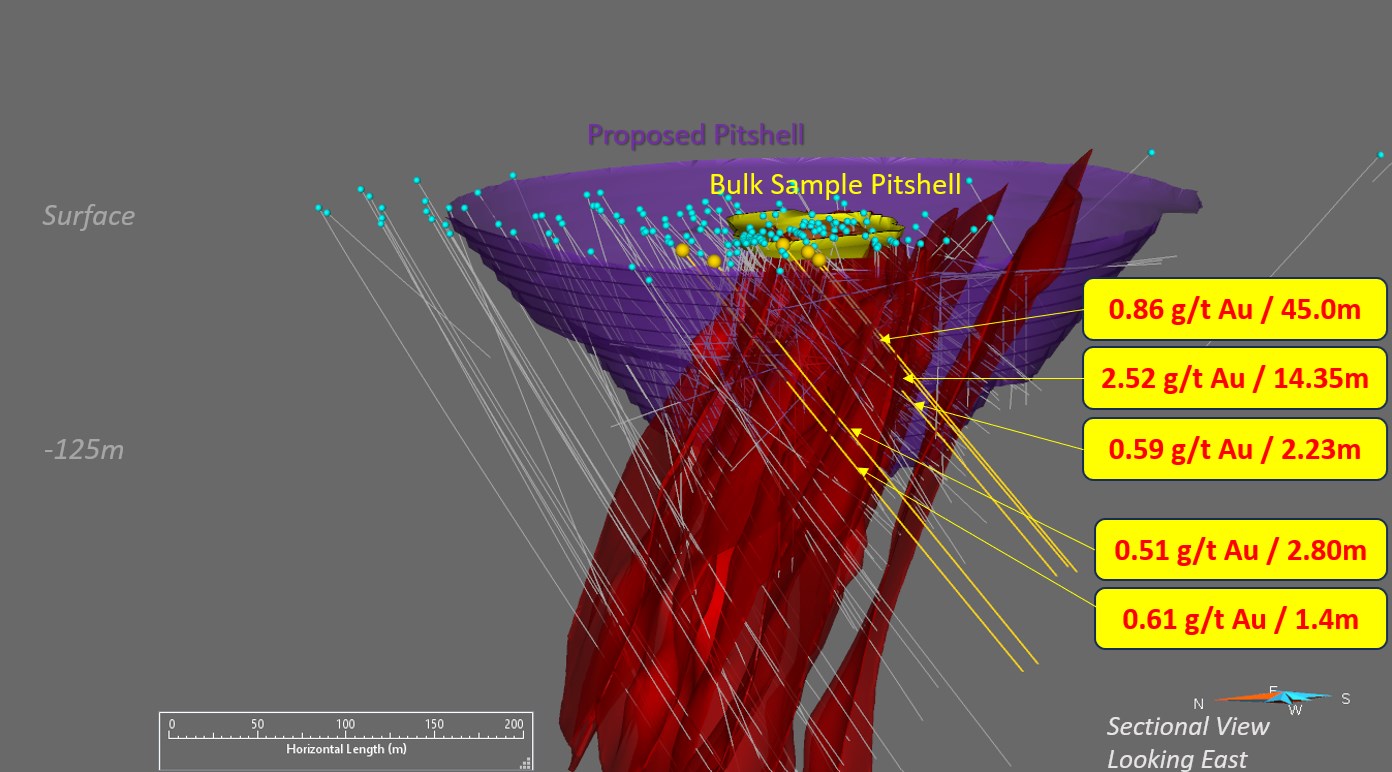
Figure 3: Swanson Deposit - Cross-Sectional View
To view an enhanced version of this graphic, please visit:
https://images.newsfilecorp.com/files/6526/324129_5f24117d744b5bf4_003full.jpg
Table 1: Significant assay results table from the Swanson Deposit drilling program
| Hole ID | From (m) | To (m) | Length (m) | Au (g/t) | Target |
| SW-26-125 | 76.00 | 121.00 | 45.0 | 0.86 | Swanson Deposit |
| Incl. | 77.50 | 88.50 | 7.50 | 2.00 | Swanson Deposit |
| And | 99.35 | 103.50 | 4.15 | 2.08 | Swanson Deposit |
| And | 119.50 | 120.00 | 1.50 | 2.47 | Swanson Deposit |
| SW-26-126 | 72.75 | 87.1 | 14.35 | 2.52 | Swanson Deposit |
| Incl. | 77.70 | 79.40 | 1.70 | 9.40 | Swanson Deposit |
| And | 84.60 | 87.10 | 2.50 | 5.37 | Swanson Deposit |
| SW-26-127 | 68.00 | 70.23 | 2.23 | 0.59 | Swanson Deposit |
| SW-26-128 | 134.20 | 137.00 | 2.80 | 0.51 | Swanson Deposit |
| SW-26-129 | 105.05 | 106.5 | 1.40 | 0.61 | Swanson Deposit |
Note: Reported intervals are drilled core lengths; true widths have not yet been determined. Composite intervals were calculated using a lower cut-off grade of 0.50 g/t Au and may include internal intervals of material below the cut-off grade. No top cut (capping) was applied to high-grade assays.
Table 2: Swanson Deposit Drill Collar Locations
| Hole ID | UTM Easting (m) | UTM Northing (m) | Azimuth (deg) | Dip (deg) | Length (m) |
| SW-26-125 | 310625 | 5381131 | 199 | -51 | 397 |
| SW-26-126 | 310593 | 5381122 | 199 | -51 | 289 |
| SW-26-127 | 310565 | 5381121 | 199 | -51 | 349 |
| SW-26-128 | 310626 | 5381188 | 198 | -52 | 385.3 |
| SW-26-129 | 310584 | 5381178 | 198 | -52 | 385 |
Note: Drill Collar Coordinates are in UTM NAD83 Zone 18
Sampling, QAQC, and Laboratory Analysis Summary
All core logging and sampling completed by LaFleur Minerals as part of its diamond drilling program is subject to a strict standard for Quality Control and Quality Assurance (QAQC), which include the insertion of certified reference materials (standards), blank materials, and field duplicate analysis. NQ-diameter sawed half-core samples from the drilling program at Swanson were securely sent by Company geologists to AGAT Laboratories Ltd. (AGAT), with sample preparation in Val-d'Or, Québec and analysis in Thunder Bay, Ontario, where samples were processed for gold analysis by 50-gram fire assay with an atomic absorption finish. Samples from selected holes were securely sent to AGAT in Calgary, Alberta, for multi-element analysis (including silver) by inductively coupled plasma (ICP) method with a four-acid digestion. AGAT sample preparation and laboratory analysis procedures conform to the requirements of ISO/IEC Standard 17025 guidelines and meet the requirements under NI 43-101 and CIM best practice guidelines. AGAT is independent of LaFleur Minerals.
The QP notes no drilling, sampling or recovery factors that could materially affect the accuracy or reliability of the data.
Qualified Person Statement and Data Verification
All scientific and technical information in this news release has been prepared and approved by Marc Ducharme, P.Geo. (OGQ), Vice President of Exploration for the Company and considered a Qualified Person (QP) for the purposes of NI 43-101. Mr. Ducharme is not independent of the Company. The QP has verified the analytical data underlying the drilling assay results disclosed in this release by reviewing the Company's QAQC protocols, core and sample logs, original assay certificates and assay database, and notes no drilling, sampling or recovery factors that could materially affect the accuracy or reliability of the data.
About LaFleur Minerals Inc.
LaFleur Minerals Inc. (CSE: LFLR) (OTCQB: LFLRF) (FSE: 3WK0) is focused on the development of district-scale gold projects in the Abitibi Gold Belt near Val-d'Or, Québec. The Company's mission is to advance mining projects with a laser focus on our PEA-stage Swanson Gold Project and the Beacon Gold Mill, which have significant potential to deliver long-term value. The Swanson Gold Project is approximately 20,642 hectares (206 km2) in size and includes several prospects rich in gold and critical metals previously held by Monarch Mining, Abcourt Mines, and Globex Mining. LaFleur has consolidated a large land package along a major structural break that hosts the Swanson, Bartec, and Jolin gold targets and several others that make up the Swanson Gold Project. LaFleur Minerals' recently refurbished Beacon Gold Mill is capable of processing over 750 tonnes per day and is being considered for processing mineralized material from Swanson and for custom milling operations for other nearby gold projects. The Swanson Gold Project is located approximately 55 kilometres north of Val-d'Or in the Abitibi Greenstone Belt, one of the world's most prolific gold-producing regions. The Val-d'Or-Malartic mining district, 50 to 75 kilometres south and southwest of Swanson, hosts several operating mines and advanced projects, including Agnico Eagle's Canadian Malartic, Goldex and LaRonde mines, Eldorado Gold's Lamaque Complex, Fresnillo's Novador project, and Cartier Resources' Chimo Mine project. Further northeast, Gold Fields is advancing the Windfall deposit, while Bonterra Resources is advancing the Barry and Gladiator deposits in the Urban-Barry gold camp. Mineralization at these properties is not necessarily indicative of mineralization at the Swanson Gold Project. LaFleur recently released the results of a positive Preliminary Economic Assessment ("PEA") results for the Company's Swanson Gold Project and the planned restart of the Beacon Gold Mill (refer to press release dated March 3, 2026).
ON BEHALF OF LAFLEUR MINERALS INC.
Andrew Elinesky
Chief Executive Officer
E: andrew@lafleurminerals.com
T: (416) 904-2725
LaFleur Minerals Inc.
1500-1055 West Georgia Street
Vancouver, BC V6E 4N7
Website: www.lafleurminerals.com | LinkedIn | Twitter/X | Instagram
Neither the Canadian Securities Exchange nor its Regulation Services Provider accepts responsibility for the adequacy or accuracy of this news release.
Cautionary Statement Regarding "Forward-Looking" Information
This news release contains "forward-looking information" within the meaning of applicable Canadian securities laws. This includes statements about the interpretation of drilling results, planned follow-up drilling at Bartec, the Swanson deposit drilling program, target generation using geophysics and AI-assisted methods, and the PEA and the Beacon Gold Mill restart. These statements are based on management's reasonable assumptions at the date of this release, but they are subject to risks and uncertainties that could cause actual results to differ materially. Those include the speculative nature of mineral exploration, the continuity and grade of mineralization, the availability of financing and permits, gold prices, and the risks described in the Company's filings on SEDAR+. Drilling results are not necessarily indicative of a mineral resource. The PEA is preliminary in nature and includes Inferred Mineral Resources that are considered too speculative geologically to have economic considerations applied to them that would enable them to be categorized as Mineral Reserves, and there is no certainty that the PEA results will be realized. Readers should not place undue reliance on forward-looking information. Except as required by law, the Company undertakes no obligation to update it.
To view the source version of this press release, please visit https://www.newsfilecorp.com/release/324129
