

One of the biggest misconceptions in investing is that institutional investors always possess an advantage over retail investors. While large funds certainly have access to research teams, management meetings, and vast financial resources, the reality is that in the microcap market, retail investors often enjoy several significant advantages.
In fact, many of the best-performing microcap stocks generate their largest gains long before institutional investors are even able to participate.
1. You Can Invest Before Institutions
This is arguably the greatest advantage of all.
Many institutional investors simply cannot buy microcap stocks due to mandate restrictions, liquidity requirements, or minimum market capitalization thresholds.
A $1 billion fund cannot meaningfully invest in a $20 million company. Even if management executes perfectly and the stock doubles, the position may still be too small to impact overall fund performance.
As a result, retail investors can buy companies when:
Market capitalizations are under $50 million
Daily trading volumes are extremely low
Institutional ownership is non-existent
Valuations are often disconnected from fundamentals
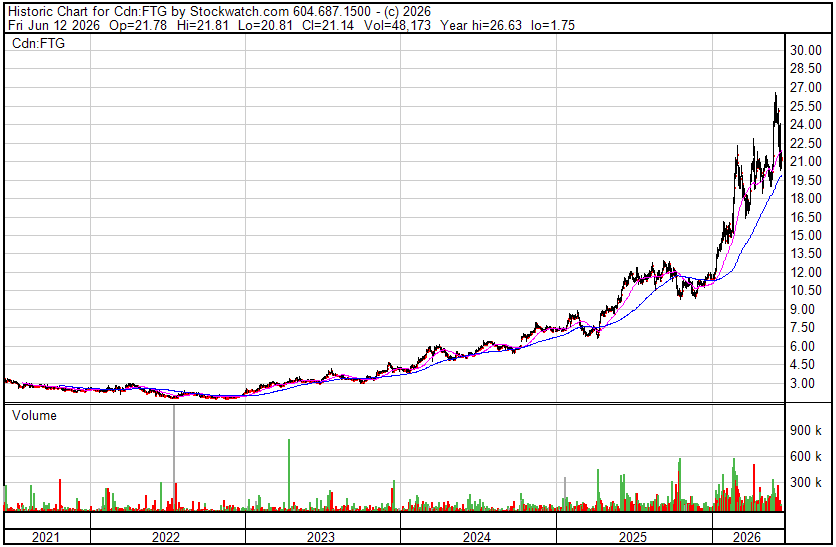
By the time institutions begin buying, much of the easy money has already been made.
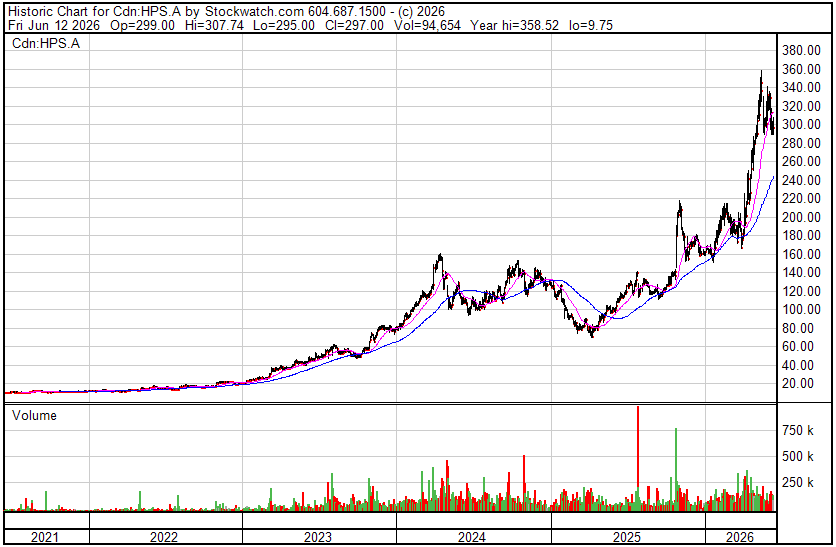
Many of Canada's biggest stock market winners began as tiny companies long before they became institutional favorites, including Constellation Software, Topicus.com, and Hammond Power Solutions.
2. You Can Move Quickly
Large funds face enormous friction when entering or exiting positions.
A retail investor can buy $5,000, $10,000, or even $50,000 worth of a microcap in a matter of minutes.
A fund manager attempting to build a $10 million position may require weeks or months.
This flexibility allows retail investors to react faster to new information, build positions before wider market recognition, exit deteriorating investments quickly, and take advantage of temporary market dislocations
In microcaps, speed can be a major edge.
3. You Can Focus on Inefficient Markets
The majority of Wall Street and Bay Street research focuses on large-cap companies.
Thousands of analysts cover companies like Apple, Microsoft, and NVIDIA.
In contrast, many microcaps have no analyst coverage, no institutional ownership, limited media attention and few investor presentations. This creates opportunities where diligent research can uncover businesses trading well below intrinsic value.
The less efficient the market, the greater the potential reward for doing your own work.
4. Management Access Is Often Easier
In large-cap investing, it is difficult for individual investors to access management teams.
Microcaps are different.
Founders and executives are often willing to answer emails, participate in investor calls, attend conferences, and discuss strategy directly with shareholders. Retail investors frequently have the opportunity to gain insights that would be impossible in larger companies.
At SmallCap Discoveries, this is one of the reasons management interviews are so valuable. Speaking directly with founders often reveals information that cannot be fully understood from financial statements alone.
5. You Can Think Longer-Term
Institutional investors face constant pressure:
Quarterly performance reviews
Client redemptions
Benchmark comparisons
Short-term performance expectations
Retail investors answer to nobody.
This allows them to hold through volatility, ignore short-term market noise, focus on business performance rather than stock price movements and benefit from long-term compounding
Many of the greatest microcap winners required years, not months, to realize their full potential.
6. You Can Invest in Special Situations
Many microcap opportunities are simply too small or too complex for institutions.
Examples include:
Founder-led businesses
Spinouts
Turnarounds
Asset-rich companies
Net-net opportunities
Emerging industry leaders
These situations often require significant work and patience but can produce outsized returns.
Retail investors can build expertise in niche sectors and exploit opportunities that larger investors ignore.
7. You Can Build Meaningful Positions
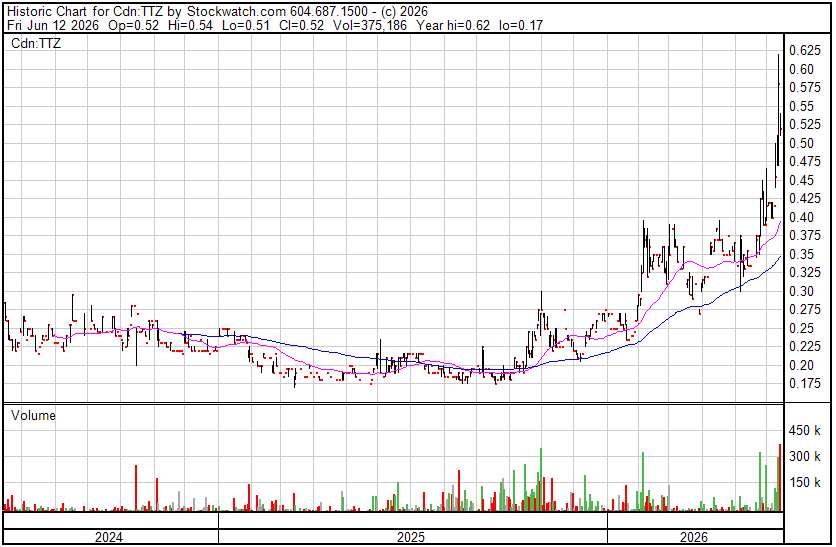
Suppose a $25 million microcap eventually grows into a $500 million company.
A retail investor may be able to establish a meaningful position early. For a large institutional fund, building a position large enough to move portfolio returns may be impossible.
This asymmetry is powerful.
A single successful microcap can have a meaningful impact on a retail portfolio, whereas even a successful investment may barely move the needle for a multi-billion-dollar fund.
The Real Competitive Advantage
The greatest edge in microcap investing is not information.
It is attention.
Most investors spend their time analyzing the same widely followed companies. Very few are willing to spend hundreds of hours researching obscure businesses with market capitalizations under $100 million.
The retail investor who develops expertise, performs deep due diligence, and maintains a long-term perspective can often compete effectively against much larger market participants.
That is why many of the most successful microcap investors focus on finding great businesses before institutions are able to own them.
In a world where everyone is searching for the next big winner, the retail investor's greatest advantage may simply be the ability to look where almost nobody else is looking.
How SmallCap Discoveries Leverages This Advantage
At SmallCap Discoveries, our entire investment process is built around this reality. We focus on uncovering high-quality Canadian microcaps before they attract institutional attention, conducting deep fundamental research, interviewing management teams, and identifying businesses with the potential to compound value over many years.
The biggest gains in investing are often made before a company becomes widely known. The challenge isn't finding companies after everyone else has discovered them—it's finding them early.
If you're interested in discovering overlooked microcap opportunities before they reach the institutional radar, consider joining the SmallCap Discoveries community. The next multi-bagger is unlikely to be found in the most crowded corner of the market. It will probably be hiding in plain sight, where few investors are willing to look.
Learn more at : https://smallcapdiscoveries.com/