

For decades, investors have searched for the “holy grail” valuation metric, a simple way to identify companies that are both growing quickly and still undervalued.
One of the most useful tools I use for that purpose is the PEG ratio.
Yet while the PEG ratio is commonly discussed in large-cap growth investing, it may actually be even more powerful in the world of microcaps.
Why? Because microcaps are where growth mispricing happens most often.
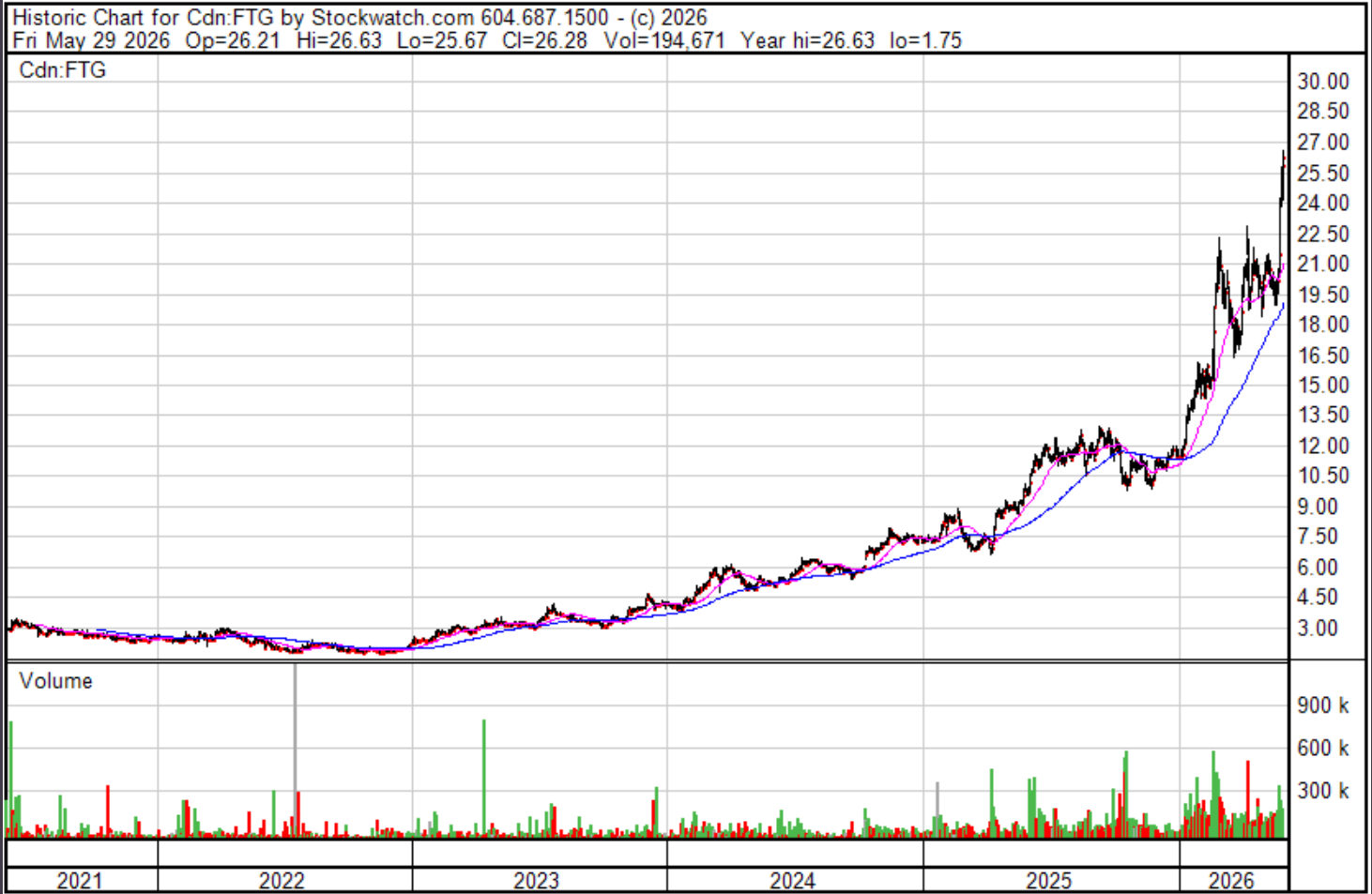
Large institutional investors typically cover mega-cap technology companies with armies of analysts, sophisticated models, and constant scrutiny. In contrast, many microcaps operate with little analyst coverage, limited liquidity, and minimal institutional ownership. That creates inefficiencies, and inefficiencies create opportunity.
For patient investors willing to do the work, PEG ratio investing can become a powerful framework for identifying emerging compounders before the broader market fully recognizes their growth trajectory.
What Is the PEG Ratio?
The PEG ratio stands for: Price-to-Earnings Ratio divided by Earnings Growth Rate.
The formula looks like this:
PEG = P/E Ratio ÷ Annual EPS Growth Rate
The goal is simple: The PEG ratio attempts to measure whether a company’s valuation properly reflects its future growth potential.
A company trading at:
10x earnings growing 5% annually may actually be expensive
25x earnings growing 40% annually may actually be cheap
The PEG ratio helps normalize valuation relative to growth.
Traditionally:
PEG below 1.0 = potentially undervalued
PEG around 1.0 = fairly valued
PEG above 2.0 = potentially overvalued
Of course, investing is never that simplistic. But as a screening mechanism, the PEG ratio can be extremely useful. Especially in microcaps.
Why PEG Ratios Matter More in Microcaps
In large-cap investing, growth expectations are often priced in rapidly. In microcaps, they frequently are not.
That is because many microcaps are in the early stages of operational scaling. Their earnings growth can accelerate dramatically while the market still values them using legacy assumptions.
This creates one of the most attractive setups in investing: Expanding earnings + expanding multiple.
When a microcap begins to prove: recurring revenue, scalable margins, strong unit economics, disciplined capital allocation, and durable competitive advantages…the market often rerates the stock significantly higher. This can create extraordinary returns.
A company moving from 8x earnings to 18x earnings while simultaneously growing earnings 30–50% annually can produce multi-bagger outcomes surprisingly quickly.
The PEG ratio helps investors identify these disconnects early.
The Best Microcap PEG Opportunities Often Look “Too Cheap”
One of the fascinating realities of microcap investing is that the best opportunities often feel uncomfortable.
Many emerging compounders initially trade at 6x–12x earnings despite 20%–50% growth rates.
Why does this happen? Several reasons: low liquidity, small market capitalization, lack of analyst coverage, or institutional ownership restrictions. Sometimes it’s due to geographic obscurity, historical baggage, prior dilution concerns, or limited investor relations budgets.
The market may simply not be paying attention and this is where disciplined microcap investors can gain an edge.
The Danger of Using PEG Ratios Blindly
Like all valuation metrics, PEG ratios can become dangerous when used mechanically.
A low PEG ratio does not automatically mean a stock is cheap.
Sometimes it means the market correctly expects:
growth to slow
margins to compress
cyclicality to emerge
customer concentration risk
competitive threats
poor management execution
In microcaps especially, investors must distinguish between temporary undervaluation and value traps.
This is critical.
A cyclical industrial company at 5x earnings during peak conditions may appear to have an attractive PEG ratio just before earnings collapse.
Similarly, promotional microcaps may advertise aggressive growth projections that never materialize.
That is why qualitative analysis matters just as much as quantitative analysis.
What Makes a High-Quality PEG Microcap?
The most attractive PEG opportunities often possess several common characteristics.
1. Recurring or Repeatable Revenue
Recurring revenue businesses deserve higher multiples because future cash flows become more predictable.
Examples include:
software subscriptions
monitoring services
maintenance contracts
compliance services
data services
“hardware-as-a-service” models
Microcaps transitioning toward recurring revenue often experience significant rerating potential.
2. Strong Incremental Margins
The best scaling businesses generate disproportionately higher profits as revenue grows.
For example:
revenue grows 20%
EBITDA grows 40%
This operational leverage can drive explosive earnings growth.
3. Founder-Led or Capital Allocator Management Teams
In microcaps, management quality matters enormously.
The best compounders are often run by aligned founders, disciplined operators, and/or long-term capital allocators. These leaders frequently reinvest capital intelligently while avoiding excessive dilution.
4. Large Runway for Growth
A company growing 30% annually sounds exciting. But the real question is: Can they sustain it?
Microcaps serving large underpenetrated markets can maintain elevated growth rates far longer than investors expect.
This is where some of the biggest winners emerge.
The PEG Ratio Works Best Alongside Other Metrics
Experienced investors rarely rely on a single valuation tool.
The PEG ratio becomes more powerful when combined with:
EV/EBITDA
Free cash flow yield
Return on invested capital (ROIC)
Gross margin trends
Organic growth rates
Insider ownership
Balance sheet strength
In many ways, the PEG ratio is best viewed as a starting point, not a conclusion. It helps narrow the field. The real work comes afterward.
Why the Market Often Misprices Microcap Growth
One reason PEG investing works particularly well in microcaps is because institutional capital structurally struggles to participate. Many funds cannot buy illiquid stocks, companies under certain market caps or businesses trading below minimum share prices. As a result, smaller companies may remain inefficiently priced until they reach a certain scale.
This creates what might be called: “The microcap growth gap”. A period where fundamentals improve rapidly but institutional ownership has not yet arrived.
For individual investors, this can be the sweet spot.
Patience Is Essential
One of the hardest parts of PEG ratio investing is timing.
Even if investors identify an undervalued growth company correctly, rerating can take time. Microcaps can remain cheap for quarters, years, or until a major catalyst emerges. Catalysts may include uplistings, acquisitions, analyst initiation, institutional buying, meaningful contract wins, margin expansion, or recurring revenue milestones.
The key is recognizing that market inefficiencies do not correct on a predictable schedule.
But when they do, the moves can be dramatic.
The Real Goal: Finding Emerging Compounders
Ultimately, successful PEG investing in microcaps is not about finding statistically cheap stocks. It is about identifying businesses where growth is durable, valuation is disconnected from reality, and management can compound value over long periods of time. The greatest microcap winners rarely look optically cheap after the market fully understands them.
The opportunity exists before that recognition occurs. That is where the PEG ratio can become incredibly valuable. Not as a magic formula, but as a lens for identifying overlooked growth before the crowd arrives. And in microcap investing, that is often where the biggest returns are found.
Learn more at: