

Oil flows through the Strait of Hormuz averaged 7.6 million barrels per day (b/d) in August 2026, 13.1 million b/d below pre-war levels. Middle Eastern exports have since begun to recover, yet the disruption showed how quickly one export corridor can turn geopolitical risk into a physical supply shortfall. Supply geography now carries a value of its own, and exploration capital is moving toward basins outside the Gulf.
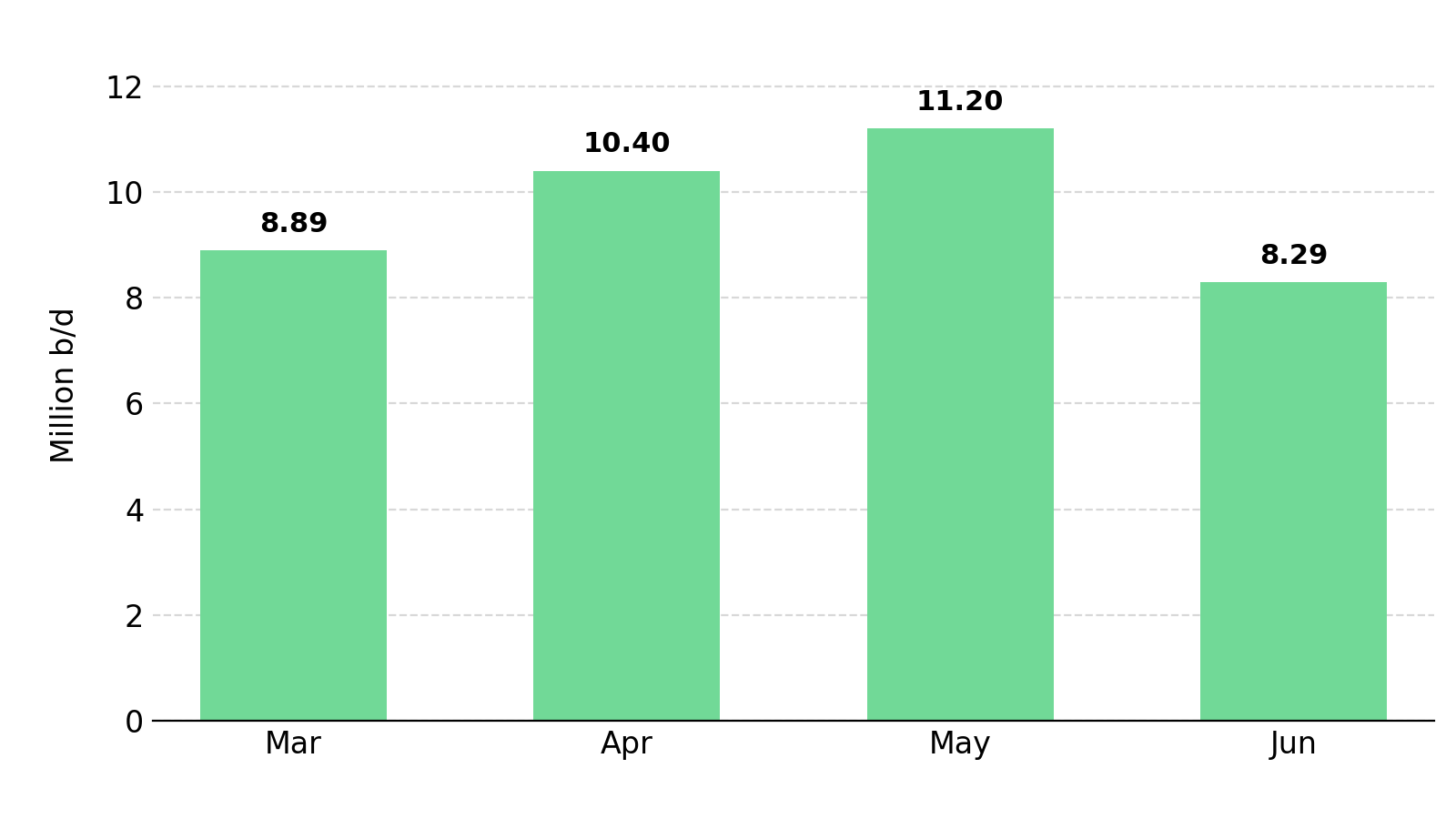
Hormuz Closure Shows Shut-In Oil Fields Take Months to Fully Return
The effective closure affected fields producing roughly 14 million b/d of crude and condensate, forcing shut-ins even where reservoirs were undamaged, while cumulative export losses approached 2.8 billion barrels. The market leaned on bypass routes, emergency stocks, and non-Gulf barrels to cover the gap. Nearly 90% of the analyzed Middle Eastern fields depend on water or gas injection to hold reservoir pressure, so around 80% of February production could need about four months to return, stretching recovery beyond the reopening of shipping lanes.
Non-Gulf Producers Narrowed the Gap, but Inventories Still Fell Sharply
Producers outside the Gulf added 420 million barrels between February and August, equivalent to 2.3 million b/d. Global inventories still fell 507 million barrels in the first six months of the conflict. The International Energy Agency (IEA) projects the US, Canada, Brazil, Guyana, and Argentina to add 1.4 million b/d outside the Organization of the Petroleum Exporting Countries and its allies (OPEC+) in 2026 and another 1.0 million b/d in 2027, as demand shifts toward Atlantic Basin barrels.
Exploration Was Already Narrowing to Fewer Basins Before the Shock
Companies had cut new-field wildcat wells and focused capital on fewer high-impact targets before the disruption began. By early December 2025, 132 conventional discoveries had added more than 8.2 billion barrels of oil equivalent of recoverable resources, concentrated in a limited number of basins.
Fewer Active Basins Make Geology & Fiscal Terms Decisive for Capital
S&P Global identifies more than 37 high-impact wells scheduled for 2026, mainly across Latin America, Africa, and Asia-Pacific. Latin America supplied 38% of 2025 discovered volumes, led by Brazil’s Santos and Campos basins. Basins with new-field wildcat wells fell from 130 in 2024 to 101 by December 2025, and only 17 held high-impact wells. With capital spread across fewer targets, geology, development economics, fiscal terms, and infrastructure decide which projects get funded.
Import-Dependent Markets Give Lower-Cost Onshore Projects a Clearer Path to Supply
In import-dependent markets, onshore projects can widen domestic supply without offshore-scale drilling budgets. Dune Oil ($TCF) is prioritizing re-entry and production testing at its M47 discovery in Turkey, where onshore wells cost about US$ 2 million to drill and US$ 3 million to complete. Successful testing could move part of its contingent resource toward reserve classification.
Scott Lower, President of Dune Oil, explains how domestic production displaces imported oil:
“This area now contributes 60% of the country’s total oil production and it’s going to keep going up from there. We’re selling at top dollar and to the refinery that’s just up the road and they’ll buy every bit of it because they’re displacing Russian, Iranian, and Iraqi oil.”
Gulf Export Recovery Narrows the Shortfall but Leaves Diversification Relevant
Middle Eastern crude exports rebounded to about 16.3 million b/d in September, the highest since February, yet remained about 3.2 million b/d below pre-conflict levels. Global oil investment is heading for a third straight annual decline to below US$500 billion in 2026 despite higher prices, as long lead times and tight offshore rig availability limit spending.
Supply Geography Now Matters as Much as Total Oil Supply
Gulf exports are recovering, but the disruption exposed how concentrated oil supply has become, and shut-in fields need months to fully restart. With upstream budgets shrinking, capital favors exploration assets holding existing discoveries, low drilling costs, accessible markets, and supportive fiscal terms. Such assets gain value once appraisal and production testing convert resources into reserves, and the pace of the Gulf restart will show how long the energy security premium persists.
Read more: Energy Security Premium Redirects Oil Exploration Beyond Middle East
Disclosure: This article features Dune Oil as a company example. Dune Oil had no influence over the topic, thesis, or conclusions of this article, and did not exercise editorial control over its content.