

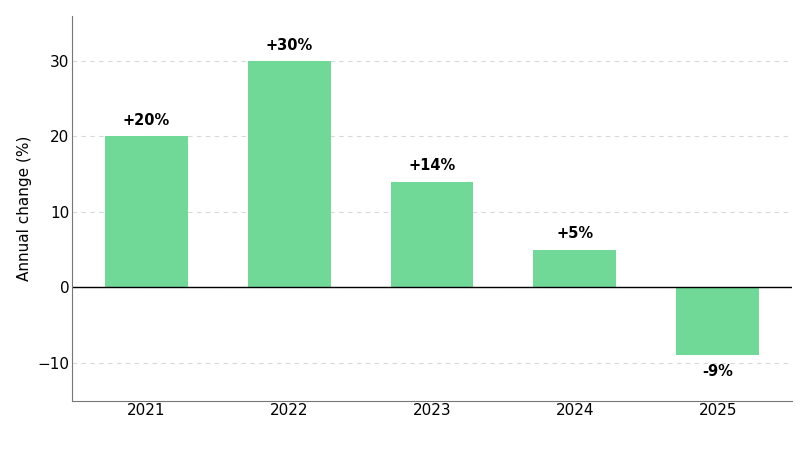
Critical mineral investment fell 9% in 2025, its first substantial decline since 2020, and exploration spending fell by more than 10%. Demand for graphite and rare earths is still projected to rise 50% to 90% by 2040, and governments are still pushing to diversify supply away from a single refining center. Capital is retreating at the point in the cycle when the supply build was supposed to accelerate.
Capital Rotated Toward Copper Rather Than Leaving the Sector Entirely
Battery-material companies cut investment by about 20%, with lithium specialists reducing spending by roughly 40%, while copper-focused companies increased investment by 8%. Merger and acquisition deal value rose 20%, partly reflecting demand for high-quality copper assets. Money did not leave the sector so much as concentrate, which raises the bar on project economics and development readiness.
Refining Concentration Means New Mines Alone Cannot Diversify Critical Mineral Supply
China accounts for more than 90% of global refining supply for graphite and rare earths, making processing a tighter bottleneck than mine output. For magnet rare earths, China supplied about 60% of mined production in 2024, 91% of refined output, and 94% of sintered permanent-magnet production. Critical mineral demand almost doubles by 2040, so alternative mine supply still needs refining, separation, and magnet capacity behind it to matter.
US$65 Billion in Commitments Only Counts Once It Is Disbursed
Public finance commitments for critical minerals in advanced economies reached about US$65 billion in 2025, more than four times the 2023 level, even as mining-company investment declined. The Group of Seven counted 195 projects representing €64 billion announced since the start of 2026, the US Export-Import Bank approved up to US$10 billion for the Project Vault reserve, and six multilateral development banks agreed in April 2026 to support value-chain development. Commitments expand supply only when funding is disbursed and projects reach construction and operation
Capital Costs Up to 150% Higher Raise the Diversification Hurdle
Refining projects outside the dominant supplier face 20% to more than 150% higher capital costs and about 50% higher operating costs. That cost gap explains how stronger policy support coexists with lower private investment, because alternative supply still competes with incumbents on economics. The US-European Union Critical Minerals Action Plan is considering border-adjusted price floors to improve revenue visibility for that supply.
Downstream Capacity Trails the Mine Supply Already Planned Outside China
Announced rare earth mining projects outside China could provide nearly 50,000 tonnes of capacity by 2035, while planned refining and separation capacity remains below 40,000 tonnes. Planned metal, alloy, and magnet capacity falls further to about 18,000 tonnes of rare earth content. The binding constraint sits downstream of the mine, not in the ground.
Shared Infrastructure Lowers the Capital Needed to Add Mineral Streams
When capital is selective, a project that adds a product using infrastructure the primary development already requires needs less incremental funding than one building a new processing route. Sovereign Metals ($SVM.AX) is advancing Kasiya in Malawi, where its September 2026 Scoping Study adds a potential rare earth stream to the planned rutile and graphite operation for US$29 million of incremental capital to first production, with no additional mining or front-end processing and low-cost byproduct graphite.
Qualification and Offtakes Decide Which New Supply Actually Reaches Buyers
Rare earth concentrate still requires separation before it reaches end markets, and graphite must meet target specifications. Offtake and processing agreements reduce commercial risk by confirming customer demand and establishing a downstream route. Capital efficiency without qualification produces a cheaper project, not a supplier.
What the 9% Investment Decline Means for Critical Mineral Holders
Private capital is shrinking into rising graphite and rare earth demand, which defers the shortage rather than resolving it. Holders should stop paying for contained tonnes and instead weight low incremental capital per product stream, a defined processing route, and signed offtakes. The re-rating arrives when public commitments are disbursed into construction starts; a US-EU decision on border-adjusted price floors is the nearest test.
Read full article here: Critical Mineral Investment Falls 9% Despite a Global Push for New Supply
Disclosure: This article features Sovereign Metals as a company example. The company had no influence over the topic, thesis, or conclusions of this article, and did not exercise editorial control over its content.