

The Japanese yen has fallen to its lowest level against the US dollar in almost four decades. The last time the yen traded this weak, many of today’s investors hadn’t even been born.
The USD/JPY exchange rate climbed as high as ¥162.40, extending the yen's losses against the US dollar to more than 3% this year. The sell-off was caused by growing concerns that Japan is struggling to keep inflation under control while other major central banks continue to maintain a relatively tighter monetary policy stance.
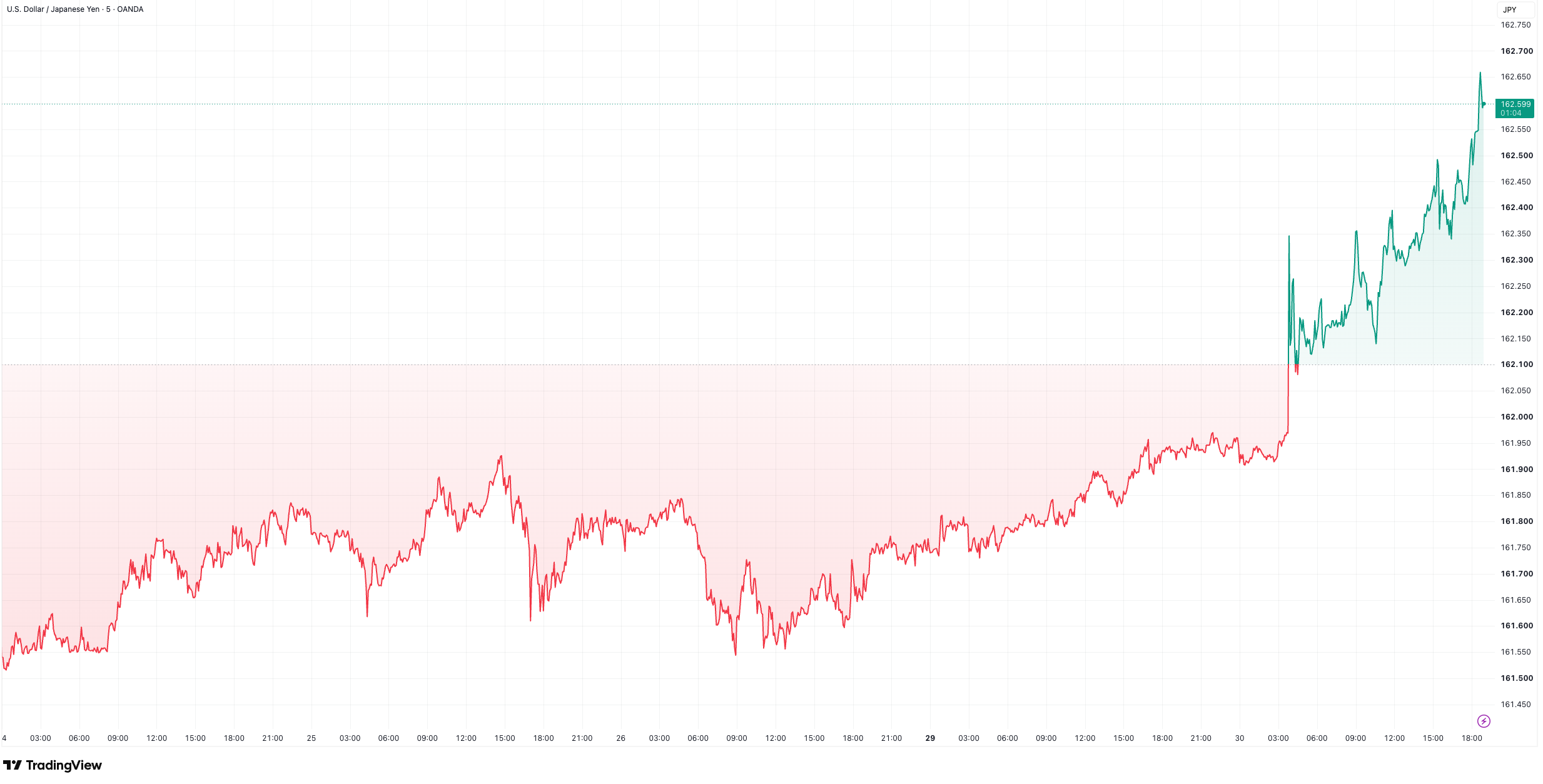
This marked the first time since December 1986 that the dollar had risen above ¥162 against the yen, fuelling speculation that Japanese authorities could step into the market to support the currency.
By the close of trading, officials had refrained from intervening. Instead, they limited their response to verbal warnings, repeating language largely unchanged from previous days.
The recent weakening in the yen has been driven by fears that the Bank of Japan is falling behind its global peers in responding to inflationary pressures. Those concerns have intensified as higher oil prices, fuelled by the conflict involving Iran, have pushed up import costs and complicated the inflation outlook.
Investors have also pointed to the BoJ’s cautious approach to interest-rate hikes as a key factor behind the currency’s decline. While inflation stood at 1.5% in May, markets remain sceptical that policymakers will tighten monetary policy aggressively enough to provide meaningful support for the yen.
Although the BoJ raised its policy rate to around 1% in mid-June — the highest level since 1995 — markets are pricing in just one additional quarter-point increase by January. In contrast, the US Federal Reserve is expected to deliver one or two more rate hikes, taking its policy rate from the current 3.5%–3.75% range even higher.
That divergence in monetary policy continues to favour the dollar. Higher US interest rates make dollar-denominated assets more attractive than Japanese ones, encouraging investors to buy dollars and sell yen. The broader strength of the US currency has also kept the US Dollar Index elevated, reinforcing upward pressure on USD/JPY.
At the same time, concerns over Japan's fiscal outlook have added another layer of pressure. Investors are watching Prime Minister Sanae Takaichi's plans for a temporary consumption tax cut, which could further strain public finances.
One proposal under consideration would reduce the consumption tax on food and beverages from 8% to 1% for two years.
Japan's standard consumption tax is 10%, while groceries are taxed at a reduced rate of 8%. Lowering that reduced rate to 1% would cost the government an estimated ¥4.4 trillion annually, underscoring the significant fiscal implications of the measure.