The United States and Iran exchanged fresh strikes in the early hours of today, dimming hopes for a forthcoming deal to end a three-month-old conflict as negotiations continue. This millitary confrontation, which began in late February with U.S. and Israeli attacks, has killed thousands and rattled global markets ever since.
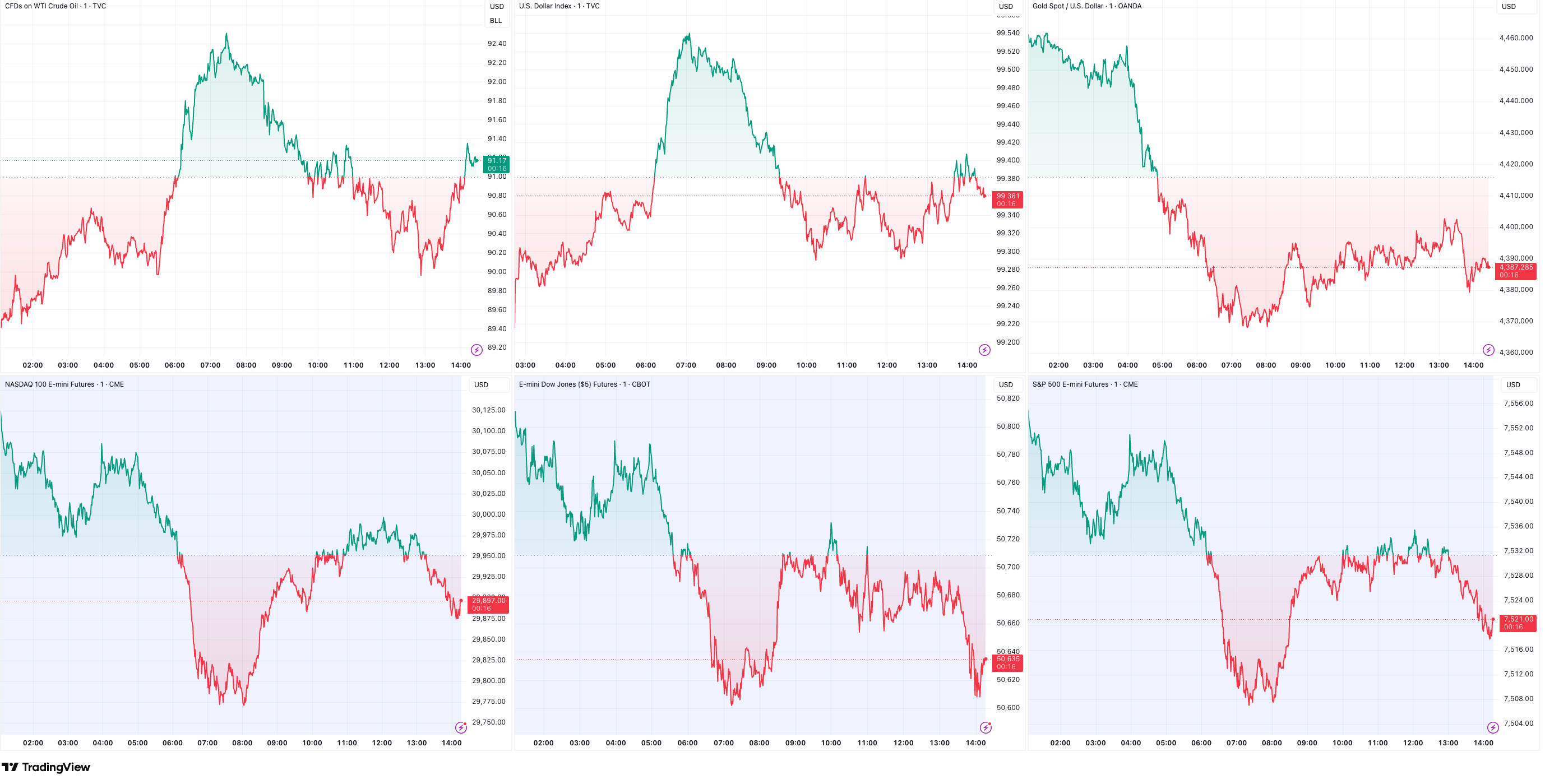
The latest escalation also quickly caught the attention of traders and investors. In short, oil prices jumped 2%, the U.S. dollar (DXY) strengthened, U.S. equity futures moved lower, and gold fell to two-month low.
That shift in sentiment came after a remarkably strong day on Wall Street. On Wednesday, the Dow Jones, S&P 500, and Nasdaq all closed at record highs. Although tech momentum cooled slightly after a massive rally in chipmakers, investors continued buying.
Earlier in the session, falling oil prices had helped fuel the rally. WTI crude dropped 5.5% to $88.68 a barrel on hopes that the Strait of Hormuz could reopen, easing pressure on energy markets.
Then came the overnight escalation.
Dow Jones futures slipped more than 100 points, while S&P 500 futures lost 0.35% and Nasdaq futures dropped roughly 0.7%.
Oil prices reversed sharply higher on the news, climbing back above $90 a barrel. Higher oil prices are a concern for investors because they can reignite inflation pressures just as markets had begun pricing in a more stable outlook.
Meanwhile, gold prices fell to a two-month low, trading around 1.6% lower at $4,385.85 an ounce — their lowest since March. Silver also came under pressure on Thursday morning, with spot prices tumbling 2.4% to $72.85 an ounce.
The U.S. dollar edged higher, making dollar-denominated gold more expensive for international buyers. Investors are concerned that the Iran conflict could drag on and keep inflation elevated. While gold and other precious metals are traditionally viewed as inflation hedges, they do not generate income. When interest rates are low, investors are often willing to overlook that drawback. But with rates expected to remain high — or even rise further — income-producing assets are becoming more attractive.
Both gold and silver both enjoyed record-breaking rallies in 2025, surging 66% and 135%, respectively. However, trading in precious metals has become far more volatile in 2026..
Now investors are focused on Thursday’s Personal Consumption Expenditures index, the Fed’s favorite inflation gauge.
Economists expect headline PCE inflation to rise 0.5% month over month and 3.8% annually (big if true). Core PCE, which excludes volatile food and energy prices, is projected to increase 0.3% monthly and 3.3% yearly.
The report carries even greater significance now that Kevin Warsh has taken over the Fed. If inflation remains stubborn while oil prices rebound again, traders may have to rethink expectations for easier monetary policy