

Hardware-as-a-Service: Why Recurring Revenue is Coming to Industrial Technology
Apr 21
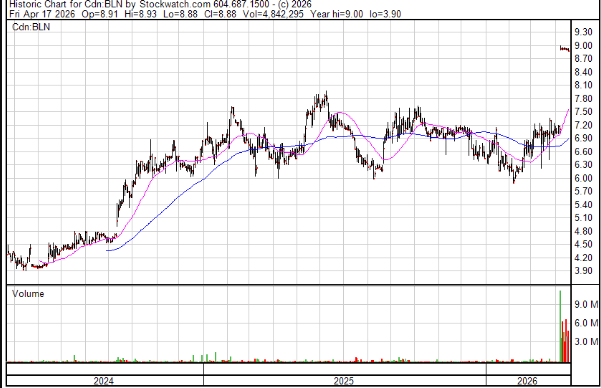
Blackline Safety Corp. (BLN.T) is a leading provider of industrial workforce safety devices, Several years ago the company changed its business model from traditional product sales to a more capital intensive, yet higher gross margin, business model similar to a leasing model. Blackline has compounded revenue at approximately 28–30% CAGR over the past five years, reflecting strong adoption of connected safety devices and recurring monitoring services.
On April 8, 2026, Blackline announced that it had entered into a definitive arrangement agreement with an affiliate of Francisco Partners Management LP, pursuant to be acquired for up to $9.50 per share, comprising of $9 per share in cash on closing plus a contingent value right of up to 50 cents per share. This price represented a premium to the recent trading price of approximately 28 per cent and 35 per cent.
For decades, hardware companies have relied on a straightforward business model: build a product, sell it, and move on to the next customer. While this approach works, it often creates unpredictable revenue streams, long sales cycles, and pressure to continuously find new buyers. Increasingly, technology companies are adopting a different strategy — Hardware-as-a-Service (HaaS) — a model that combines physical products with recurring revenue economics similar to software.
Under the Hardware-as-a-Service model, customers do not purchase equipment outright. Instead, they pay a recurring subscription or usage-based fee for access to the hardware, along with software, maintenance, and ongoing support. The provider retains ownership of the equipment and delivers a bundled solution designed to produce measurable outcomes for the customer.
This approach is gaining momentum across sectors such as robotics, IoT, industrial inspection, marine technology, medical devices, and enterprise infrastructure. It reflects a broader shift toward subscription-based consumption of technology, where customers prioritize flexibility, performance, and cost predictability.
One of the primary advantages of HaaS is that it lowers the upfront cost required to adopt new technology. Industrial hardware can require significant capital investment, which can delay purchasing decisions and limit adoption among smaller operators. By converting capital expenditure into an operating expense, HaaS allows customers to deploy advanced equipment without large initial outlays. This can shorten sales cycles and accelerate market penetration.
For companies, the benefits extend beyond improved adoption rates. Recurring revenue tends to be more predictable and often receives higher valuation multiples from investors. Subscription models can also produce higher lifetime customer value and stronger retention, particularly when hardware is integrated with proprietary software or data analytics. Once equipment is installed and embedded into a customer’s workflow, switching providers becomes more difficult, creating defensible competitive advantages.
The HaaS model also encourages continuous product improvement. Because the provider maintains ownership of the hardware, it is incentivized to ensure the equipment remains reliable and up to date. Software updates, performance enhancements, and predictive maintenance can be delivered over time, improving customer outcomes and strengthening relationships.
Typical pricing structures vary depending on the industry. Some companies charge a fixed monthly subscription, while others charge based on usage, such as per hour of operation or per inspection completed. Hybrid models combining hardware, software, and service contracts are increasingly common.
Industries with high-value equipment and measurable performance outcomes are particularly well suited to the HaaS approach. Robotics and inspection systems, environmental monitoring devices, telematics equipment, and industrial automation technologies are all examples of hardware categories that can be effectively delivered through recurring revenue models.
For investors, HaaS businesses often exhibit attractive characteristics, including recurring revenue visibility, strong customer retention, and opportunities to expand revenue through software and data services. As devices become more connected, the data generated by hardware systems can become an additional source of value, creating platform-like economics over time.
Examples of Canadian publicly listed companies utilizing the HaaS approach include:
Kraken Robotics - PNG.V
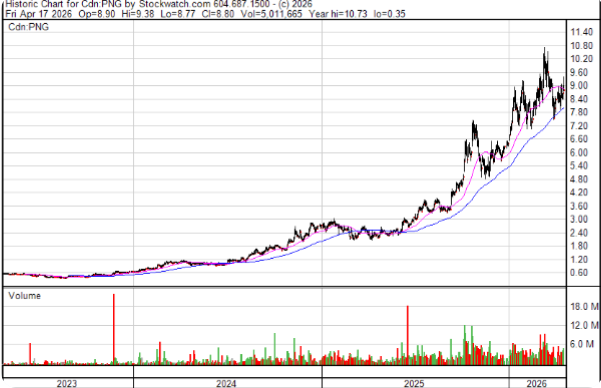
Kraken develops subsea sensors, batteries, and robotic systems used in offshore energy and defence applications. While historically hardware-focused, the company increasingly generates recurring revenue through survey services and robotics-as-a-service offerings.
Service revenue has grown significantly following acquisitions such as 3D at Depth, expanding the company’s recurring data and inspection capabilities. This hybrid hardware-plus-services approach can smooth revenue volatility and increase customer lifetime value.
Zedcor - ZDC.V
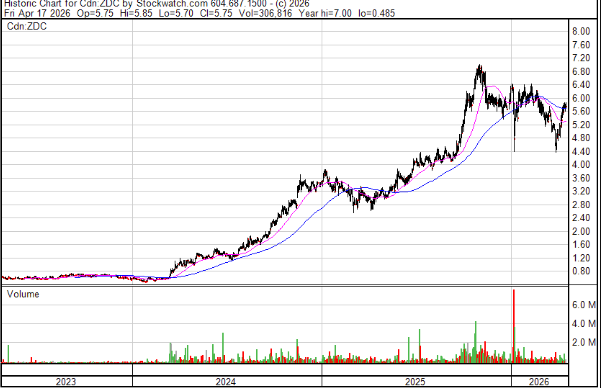
Zedcor provides mobile surveillance towers equipped with cameras and remote monitoring capability. Customers typically rent the equipment under ongoing service contracts, creating recurring revenue streams.
The company operates a fleet of proprietary surveillance towers connected to centralized monitoring centres, illustrating how hardware assets can be monetized continuously through service agreements. This model closely resembles infrastructure-style recurring revenue, where utilization of physical assets drives predictable cash flow.
BeWhere Holdings - BEW.V
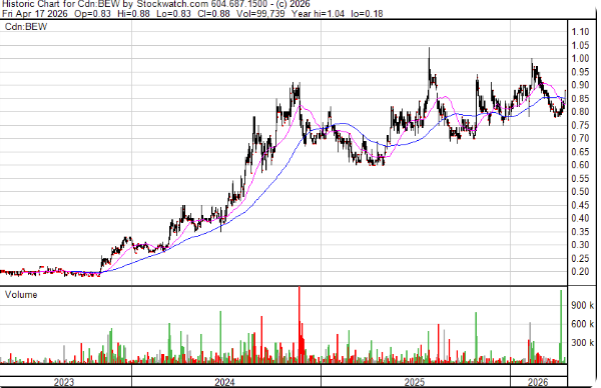
BeWhere develops low-power IoT asset tracking devices used to monitor equipment, containers, and mobile assets. Its business model combines device sales with recurring connectivity and data platform revenue.
The company’s hardware-enabled SaaS (HSaaS) strategy has driven steady growth in annual recurring revenue, which has reached approximately $8M+ as adoption expands across logistics, transportation, and industrial markets. Because customers rely on ongoing connectivity and software dashboards, BeWhere benefits from recurring subscription revenue layered on top of hardware deployments.
Tantalus Systems - GRID.T
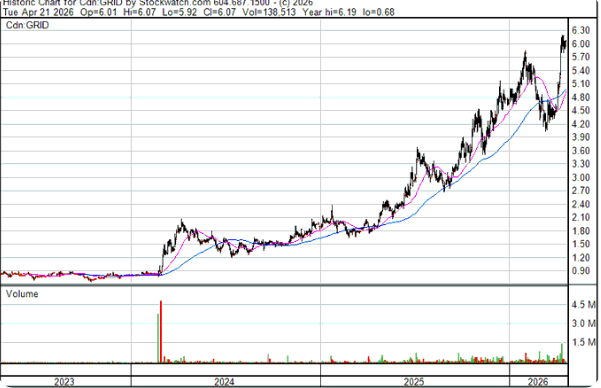
Tantalus provides smart grid communications devices, sensors and software platforms used by electric utilities to modernize distribution infrastructure. The company’s solutions combine connected hardware endpoints with recurring software, analytics and network management services.
Its platform enables utilities to collect real-time operational data from meters, grid sensors and communications modules, creating an industrial IoT network that supports predictive maintenance and grid optimization.
Recurring revenue is generated through software licenses, hosting services and ongoing support contracts tied to deployed infrastructure.
Tantalus illustrates how mission-critical infrastructure hardware can evolve into a long-term recurring data platform, where utilities rely on continuous monitoring and analytics rather than one-time equipment purchases.
Inspection and Industrial Robotics Platforms
Emerging industrial technology platforms such as SewerVUE Technology Corp* and Reach Systems* demonstrate how HaaS can be applied to infrastructure inspection and robotics markets.
Inspection robots, cameras, and tether management systems are increasingly deployed under service contracts rather than sold as standalone equipment. Customers benefit from reduced upfront costs, while providers benefit from recurring inspection revenue and long-term customer relationships.
In industries such as municipal infrastructure inspection, ongoing maintenance requirements create opportunities for recurring deployment of robotic systems. Over time, service contracts can generate more stable revenue than project-based hardware sales alone.
Challenges of the Model
Despite its advantages, the HaaS model requires careful execution. Companies must fund the upfront cost of manufacturing or acquiring equipment, which can create balance sheet pressure during growth phases. Logistics, maintenance infrastructure, and product reliability are also critical factors. Businesses must ensure that recurring pricing adequately reflects the lifetime cost of supporting deployed equipment.
As industrial technology becomes increasingly digitized, the line between hardware and software continues to blur. Customers are increasingly purchasing outcomes rather than products, and providers are structuring offerings around performance, uptime, and data insights.
Hardware-as-a-Service represents a natural evolution in how physical technology is delivered and monetized. By aligning the interests of providers and customers, the model has the potential to accelerate adoption of advanced equipment while creating more stable and scalable business economics.
As adoption grows across robotics, industrial inspection, and connected infrastructure, Hardware-as-a-Service is likely to become an increasingly important model for emerging technology companies seeking to build durable competitive advantages and long-term enterprise value.
The Bottom Line
Hardware-as-a-Service is transforming how industrial technology companies generate revenue. By combining physical products with recurring software and data services, companies can create more predictable financial performance and stronger competitive positioning.
Canadian companies such as BeWhere Holdings, Blackline Safety, Kraken Robotics, Zedcor and NameSilo Technologies ( URL.C) (through SewerVUE and Reach Systems) illustrate how the model can be applied across IoT, robotics, and industrial inspection markets.
As connectivity continues to expand and customers prioritize outcomes over ownership, Hardware-as-a-Service is likely to become an increasingly important strategy for emerging technology companies seeking scalable growth and long-term enterprise value.