

Gold accounted for 42% of new mines entering production from 2020 through 2025, according to S&P Global, and safe-haven buying is supporting prices behind future mine revenue.
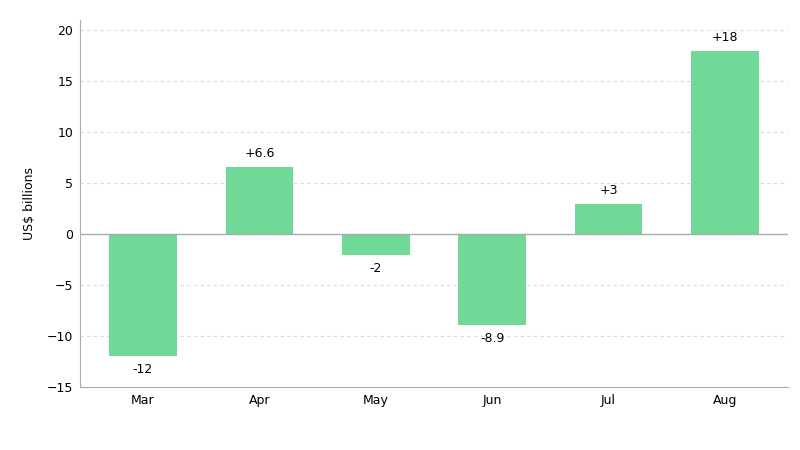
Fiscal Worries Pushed Gold ETF Inflows to a Near-Record Month
Bullion purchases do not fund mines directly, so capital still flows only to projects with credible studies, permits, and repayment capacity.
The World Gold Council reported US$18 billion of August inflows into physically backed gold exchange-traded funds (ETFs), the second-highest month on record, tied to fiscal, Treasury market, and currency concerns. Central banks added a net 288.9 tonnes in the second quarter, up 62% year over year. Sustained demand supports prices above conservative study assumptions, lifting projected cash flow and debt-service capacity.
Gold Funding Rose as Capital Moved Into Fewer and Larger Deals
Junior and intermediate gold fundraising reached US$1.20 billion in April, up from US$837 million in March, even as financings fell from 82 to 74. Exploration budgets rose 11% to US$6.15 billion in 2025, with 51% directed at or near existing mines, so clear milestones carry more weight in financing discussions.
Exploration Spending is Pushing Known Gold Systems Toward a Mine Plan
Australian gold exploration spending rose 23.6% quarter-on-quarter in the June 2026 quarter on a non-seasonally adjusted basis. P2 Gold ($PGLD) expanded known mineralization at Gabbs. A feasibility study targeted for the first quarter of 2027 is evaluating average annual production of 150,000 ounces of gold plus copper.
Economic Studies Turn Big Gold Finds Into Plans Lenders Can Fund
A preliminary economic assessment (PEA) gives the first integrated view of production rates and costs, opening the route to financing. Tudor Gold ($TUD) intersected 101 meters grading 0.98 grams per tonne of gold at Perfectstorm, open in all directions about one kilometer from Goldstorm, where an underground PEA is underway.
Secured Permits Let Higher Gold Prices Flow Into Construction Financing
Construction funding depends on secured permits and economics holding under conservative assumptions. U.S. Gold Corp. ($USAU.US) has secured all major permits for CKGold, and its March 2026 feasibility study shows an after-tax NPV at a 5% discount rate rising from US$632 million in the base case to US$946 million at US$4,000 per ounce of gold.
George Bee, President and Chief Executive Officer of U.S. Gold Corp., links price to payback:
“This project makes a lot of money at a US$3,250 gold price level, but at consensus pricing it pays back in about a year and a half. We are now going into financing, which is another de-risking step, and then into development.”
First Sales Create Revenue During Ramp-Up
First sales give capital providers evidence of execution. Cabral Gold ($CBR) sold its first gold from Phase 1 at Cuiúçuí in September at a net realized price above US$4,200 per ounce, and remains on schedule and on budget for commercial production in the fourth quarter of 2026.
Gold Price Volatility Tests Project Funding Plans
Gold fell 6.6% in September on interest-rate expectations, within a supportive long-term demand backdrop. Funding plans built on conservative price decks reduce dependence on recent highs, while prices above the base case add financing flexibility.
Gold Demand Rewards Projects Built to Work at Conservative Prices
Safe-haven buying supports gold prices without funding mines directly, so value accrues to projects converting price support into permits, studies, and first sales. Funding matched to development needs and conservative price decks preserve more upside for shareholders. Re-rating follows when fourth-quarter ramp-ups and upcoming feasibility results show recoveries, costs, and cash flow holding at current gold prices.
Read more: Gold’s 42% Share of New Mines Links Demand to Mine Investment
Disclosure: The article features Tudor Gold, P2 Gold, U.S. Gold Corp., and Cabral Gold as company examples. None of the companies had influence over the topic, thesis, or conclusions of the article, and none exercised editorial control over its content.