


Reactor uranium requirements are projected to exceed 150,000 tonnes a year by 2040, more than double the roughly 68,920 tonnes needed in 2025. Existing mines face resource depletion in the mid-2030s, even as 39 countries now back a pledge to triple nuclear capacity by 2050.
Nuclear Tripling Pledge Now Covers Two-Thirds of Global Output
China and Brazil were among six countries to join the pledge since the previous climate summit, the World Nuclear Association (WNA) reported on November 12, 2026. Additional reactors require secure uranium fuel sourcing, and the WNA now counts 88 GWe under construction, up from 76 GWe.
Mine Depletion in the Mid-2030s Requires Replacement Capacity
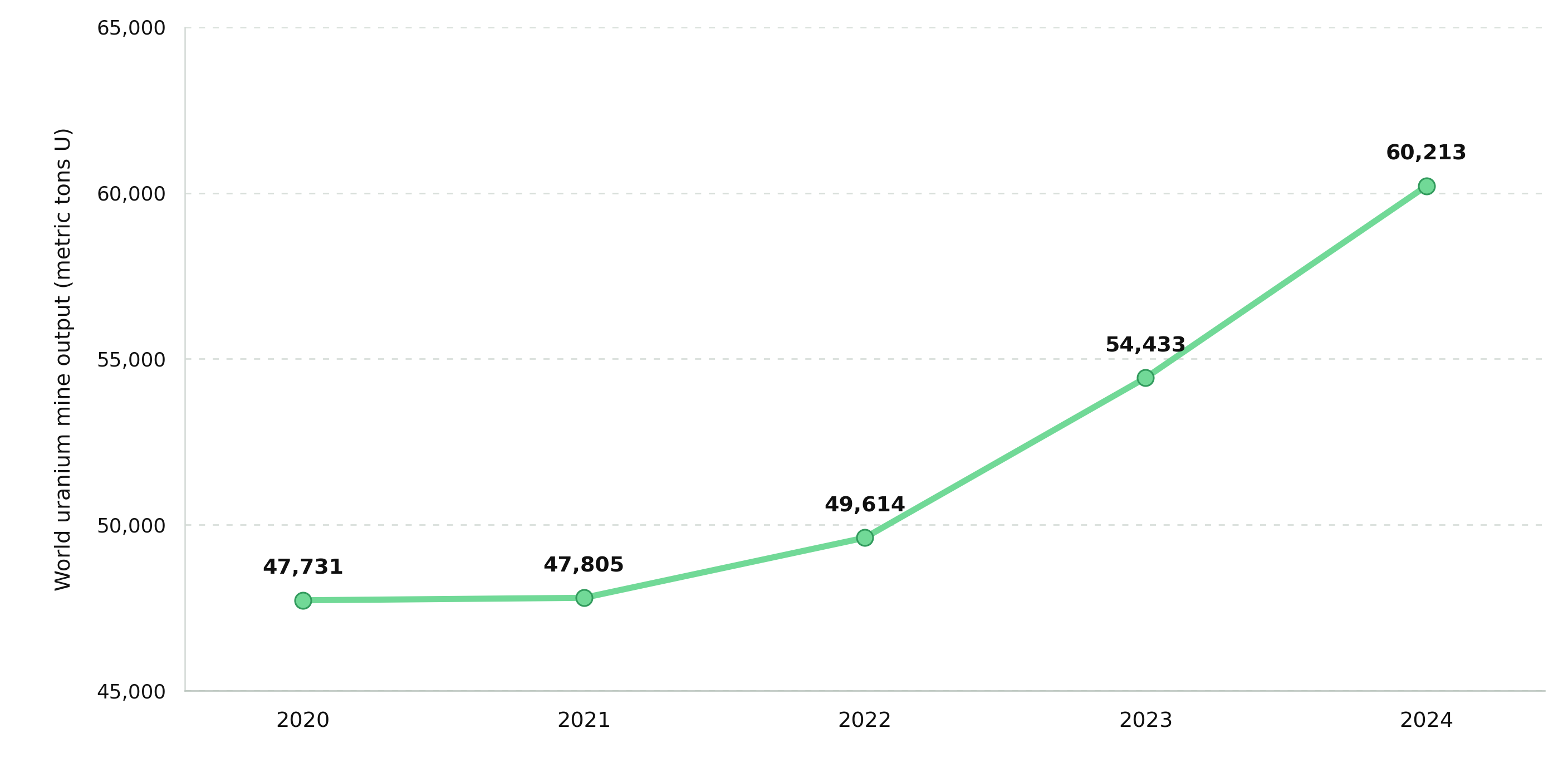
Primary uranium production supplied approximately 90% of annual reactor requirements in 2024. The International Energy Agency (IEA) reports the three largest producing countries supply almost three-quarters of mine output, and uranium ownership rules can affect mine financing, favoring projects across more jurisdictions.
Exploration Drilling Accelerates as the Industry Searches for Larger, Scalable Deposits
US exploration drilling rose to 1,824 holes in 2025 from 1,324 in 2024, the US Energy Information Administration (EIA) reported. ATHA Energy ($SASK) connected two discoveries at its Angilak project in Nunavut across 3.4 kilometers of mineralization.
Troy Boisjoli, Chief Executive Officer of ATHA Energy, explains why uranium supply needs larger discoveries:
"It's clear to me what the market is looking for, and this is what the industry needs. It is large, scalable assets that can become a meaningful component to help solve what is nearly an existential supply deficit going into 2030."
The WNA projects global nuclear capacity doubling from 372 GWe in 2024 to 746 GWe by 2040. Atomic Eagle ($AEU.AX) regained a 60% interest and operational control of Niger's Madaouela project in September 2026, which holds a reported foreign resource estimate of 116.5 million pounds of uranium oxide. A resource update and scoping study are targeted for the first quarter of 2027.
Phil Hoskins, Chief Executive Officer of Atomic Eagle, highlights why anticipated uranium shortages favor mine development:
"I think if people understand that what we own is valuable, particularly in a uranium market where the deficit is going to be significant by the time this project is capable of coming online, people will be scrambling for new production assets."
Government Reactor Targets Add Value to High-Grade Deposits Near Existing Mills
Meeting national targets by 2050 needs another 548 GWe beyond identified projects, the WNA estimates. IsoEnergy ($ISO) confirmed high-grade mineralization about 500 meters east of its Hurricane deposit in Saskatchewan, which holds a 48.6 million-pound indicated uranium oxide resource averaging 34.5% grade, about 40 kilometers from the McClean Lake mill.
US Import Reliance Creates Room for Domestic Production Growth
US uranium output more than tripled to about 2.1 million pounds in 2025, yet US-origin uranium made up only 7% of deliveries to civilian operators, the EIA reported. enCore Energy ($EU) completed its Upper Spring Creek first phase and Alta Mesa wellfield 3 extension, both awaiting final regulatory approval, with operations targeted before the end of 2026.
Nuclear Buildout Increases Capital Needs Across the Fuel Supply Chain
Meeting the pledge would require construction rates about six times the 2025 pace of 11 reactor starts. The larger reactor fleet would increase annual uranium fuel requirements, while conversion capacity is already tight. US operators reported 186 million pounds of unfilled uranium oxide equivalent requirements through 2035.
Contract-Ready Uranium Projects Gain as Supply Tightens
Nuclear policy now runs ahead of the mine supply needed to fuel it. With existing mines depleting in the mid-2030s and US utilities still short on contracted pounds, value is likely to concentrate in projects showing permits, defined economics and delivery schedules utilities can contract against. Regulatory approvals and scoping studies due over the coming months mark the first steps toward a re-rating.
Read more: 39-Nation Nuclear Pledge Raises Need for Uranium Mine Investment
Disclosure: This article features ATHA Energy, Atomic Eagle, IsoEnergy and enCore Energy as company examples. None of the companies influenced the topic, thesis, or conclusions of this article, and none exercised editorial control over its content.Write something
